Architectural Embroidered Wall Panels: When Textile Becomes Surface System
Embroidered wall panels are often described as textile art applied to vertical planes. Yet at the architectural scale, embroidery behaves differently.
When surface area expands, material logic must shift from ornament to structure. Density, fall, directional movement, and substrate stability begin to determine whether a textile installation integrates with space — or competes with it.
The distinction is not stylistic. It is structural.
Surface System, Not Applied Decoration
At smaller scales, embroidery may operate as image or embellishment. Within architectural environments, however, embroidered wall panels must function as surface systems.
A surface system considers:
• Substrate integrity
• Load distribution
• Light absorption
• Directional rhythm
• Long-term material behaviour
Rather than applying embroidery onto a finished wall, the textile surface becomes part of the spatial composition — calibrated to proportion, adjacency, and sightlines.
** Architectural Surface Systems
When developed with structural awareness, the surface holds presence without visual excess.
Vertical Rhythm & Suspended Weight
Large-format embroidered surfaces introduce gravity.
Downward movement, suspended density, and tonal restraint can alter how a room feels — drawing the viewer inward rather than projecting outward. The role of embroidery in this context is not to decorate, but to modulate atmosphere.
Studies exploring canopy logic, vertical descent, and density gradients demonstrate how textile articulation can behave architecturally rather than illustratively.
At scale, even muted shimmer or self-toned embroidery can command attention through proximity and material depth rather than contrast.
Material Intelligence at Architectural Scale
Embroidered wall panels demand consideration beyond stitch technique.
Thread anchoring, tension control, substrate compatibility, and long-term environmental behaviour must be evaluated prior to installation. Textile movement — especially in natural fibre systems — requires foresight when integrated into fixed architectural planes.
** Material And Process Methodology
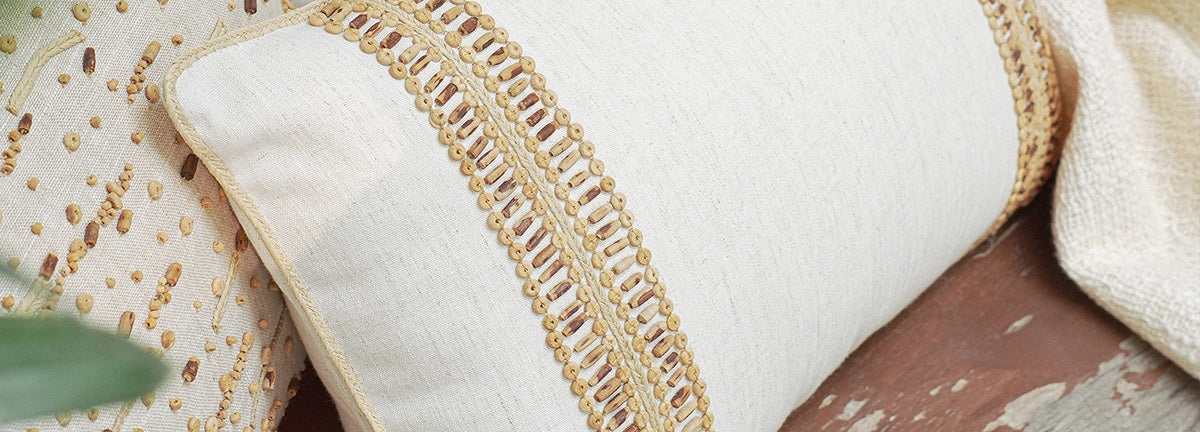
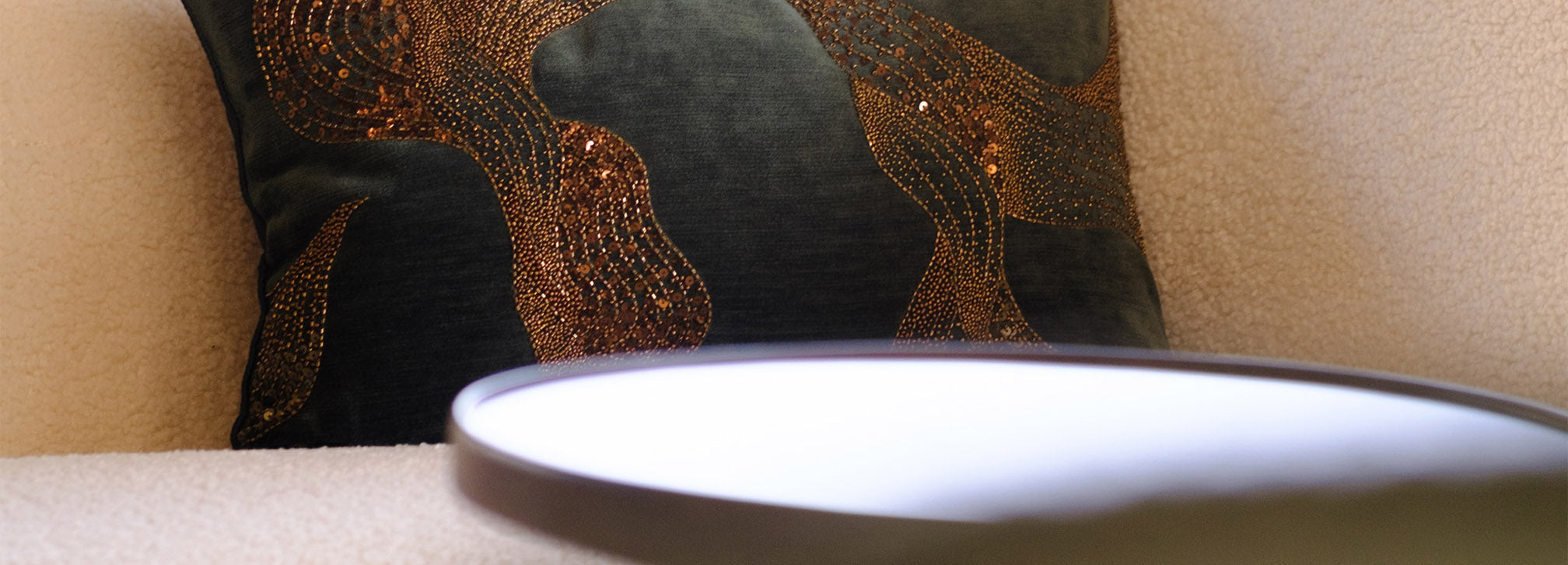
Materials such as silk, cotton-linen blends, velvet bases, metallic zari, and glass bead articulation must be calibrated to maintain restraint without losing structural clarity.
The question shifts from “What does it depict?” to “How does it behave?”
From Study to System
Architectural embroidery rarely begins at wall scale.
It often evolves from contained surface studies — framed textile explorations where edge containment, fall, and internal rhythm are first examined. These studies allow structural logic to be resolved before translation into larger planes.
When scaled thoughtfully, the resulting panels retain coherence. Density remains intentional. Vertical movement continues uninterrupted. The surface reads as an integrated field rather than assembled segments.
This approach ensures continuity without spectacle.
** Smaller textile fragments often emerge from these studies before architectural translation.
Textile Wall Panels Within Contemporary Interiors
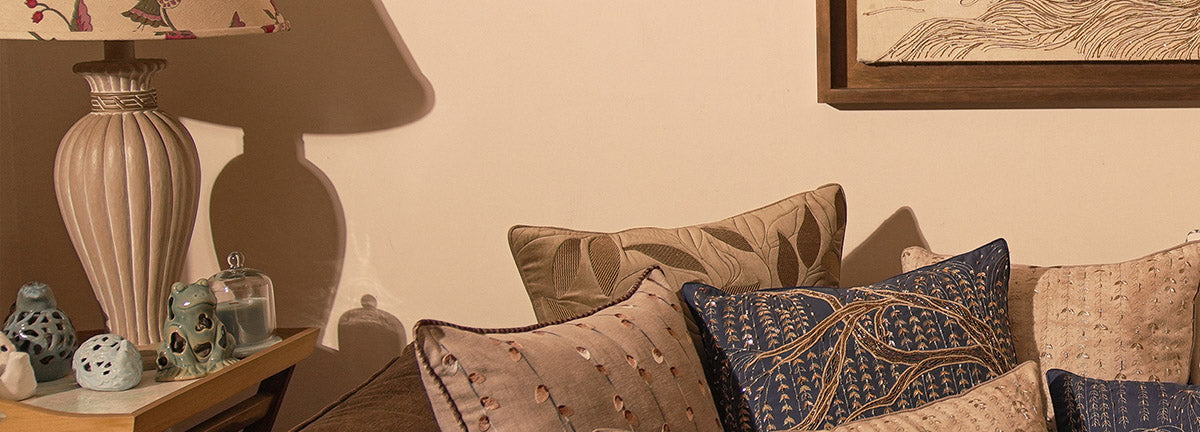
In quiet interiors — libraries, transitional corridors, contemplative bedrooms, private lounges — embroidered textile panels can introduce narrative depth without assertion.
They function through proximity. Their complexity reveals itself gradually. The surface supports the atmosphere rather than dominating it.
Architectural embroidery, when developed as a system, becomes less about embellishment and more about spatial discipline.
Closing
Embroidered wall panels, when conceived as surface systems, operate beyond decoration. They shape how light settles, how gravity is perceived, and how material presence anchors space.
The difference lies not in visual complexity, but in structural intent.