Why Flat Surfaces No Longer Satisfy High-End Interiors
The Fatigue of Visual Novelty
Luxury interiors have mastered the immaculate surface. Seamless marble slabs, flawless veneer sheets, digitally precise murals, and polished planes without interruption have defined refinement for decades. The eye reads these surfaces instantly. Their resolution is complete. Their precision is undeniable.
But visual resolution is not the same as spatial depth.
Global clients have seen spectacle across continents — stone from Italy, metal from Belgium, murals from Paris, glass from everywhere. The language of visual novelty is now fluent. And fluency reduces surprise.
Flatness still impresses.
It simply no longer sustains engagement.
In contemporary luxury interior design, this is the quiet turning point.
When Experience Stops at the Eye
A surface can be technically perfect and yet remain perceptually shallow. It may complete a wall, resolve a joinery system, and photograph beautifully — but it does not necessarily deepen the experience of inhabiting the space.
In expansive villas, architecturally ambitious residences, and high-end residential interiors, expectation has shifted. Luxury is no longer evaluated only by visual refinement. It is evaluated by how surfaces respond to light over time, how they modulate scale, and how they shape atmosphere throughout the day.
Flat wall finishes deliver clarity.
They rarely deliver continuity.
They conclude architecture.
They do not fully engage with it.
Tactility as Spatial Intelligence
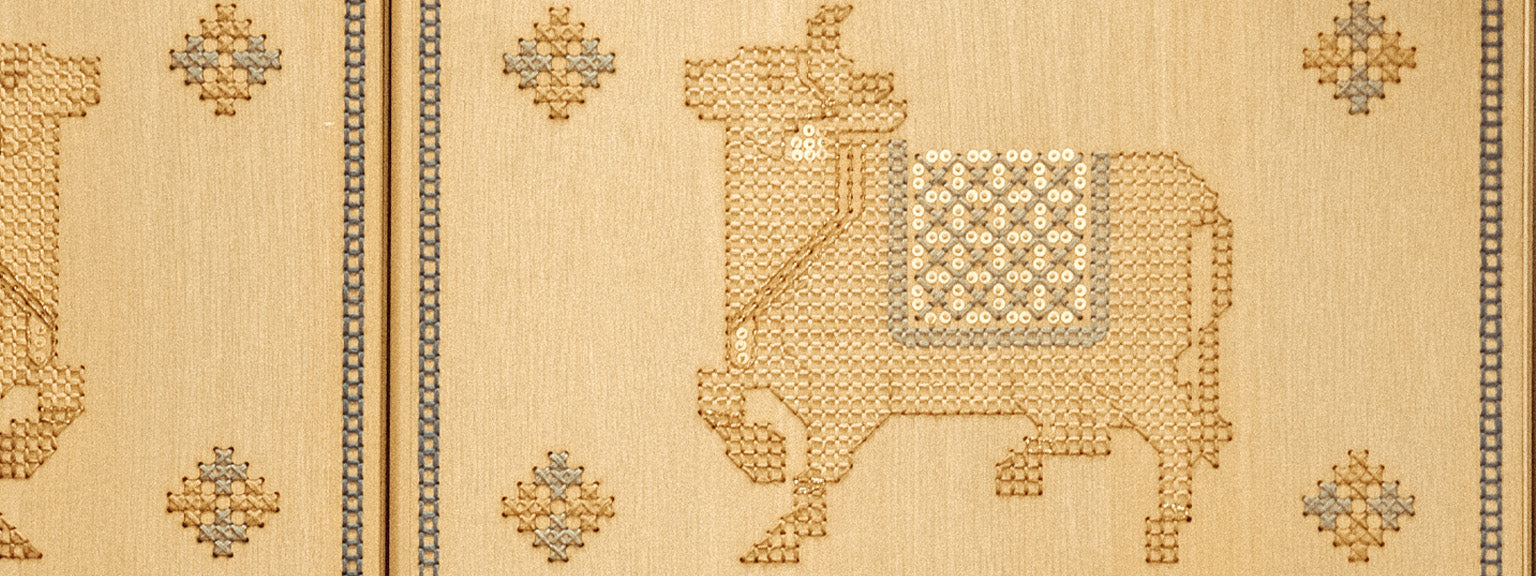
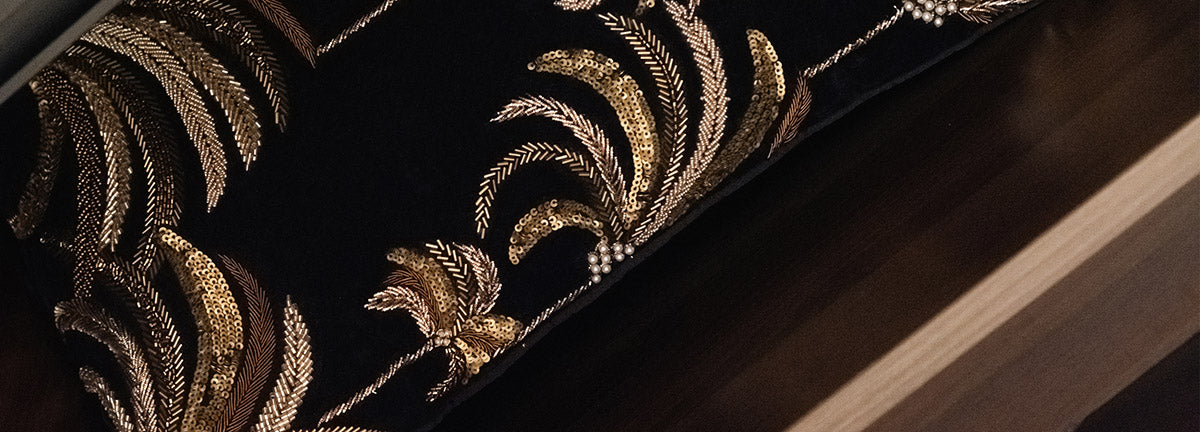
Dimensional wall surfaces introduce a different order of intelligence. Relief alters how light settles across a plane. Stitch articulation changes absorption. Calibrated depth introduces rhythm without graphic excess.
This is not ornament layered onto a surface. It is architectural surface engineering.
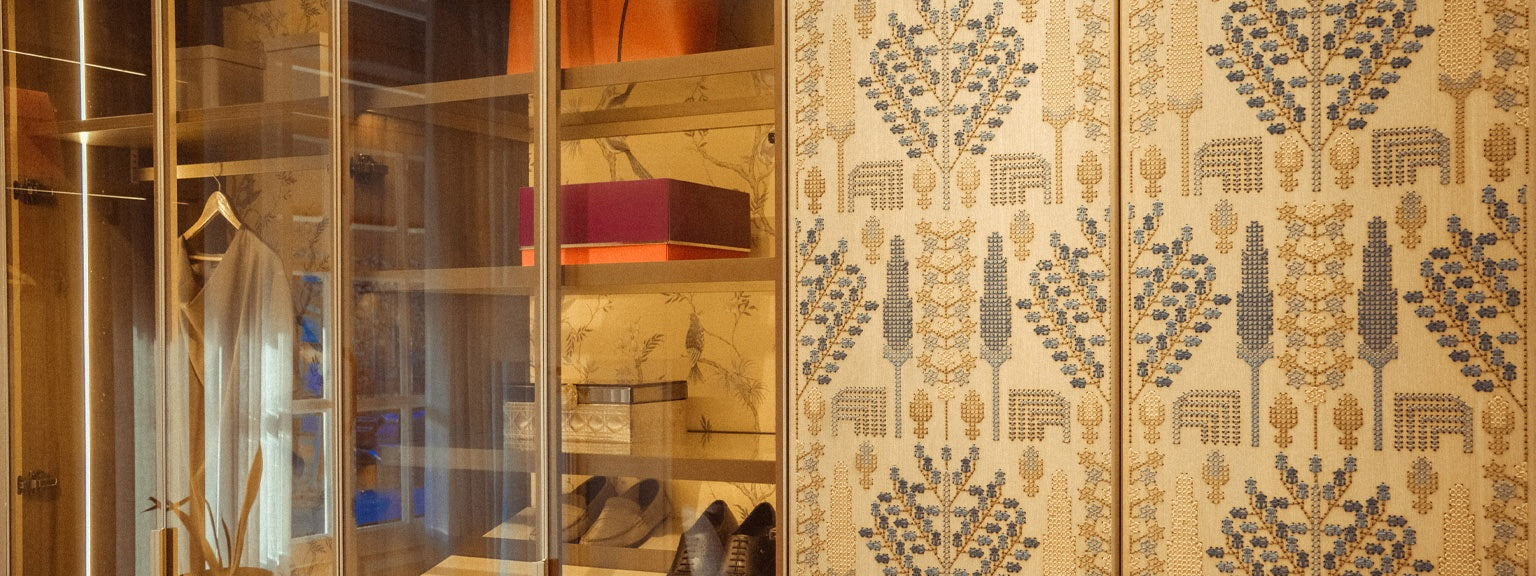
Architectural embroidered wall panels, stitched veneer feature walls, and commissioned textile surface systems developed at scale operate differently from printed wallpapers or purely decorative panels. They are engineered to engage proximity rather than projection.
They are not consumed in a glance.
They unfold.
Light lingers differently in the morning than in the evening. Shadow gathers within relief. The surface rewards return.
** Architectural Embroidered Wall Panels
** Technical Guide to Embroidered Veneer Panels
Beyond Performance
Many contemporary interiors are designed to perform. They resolve quickly. They impress visitors. They translate seamlessly into photographs.
But the spaces we inhabit daily demand something more enduring.
They demand material that remains compelling on the tenth day — not only the first.
Flat surfaces deliver visual precision.
Dimensional architectural surface systems deliver companionship.
One is admired momentarily. The other becomes familiar through repetition of light, through accumulated shadow, through tactile memory. It does not demand attention. It earns it.
Luxury that performs once is impressive.
Luxury that sustains engagement becomes personal.
A Recalibration of Surface Expectation
This shift is not a rejection of smoothness, nor an excess return. It is an expansion of expectation.
In high-end interior design, surfaces are no longer passive finishes. They are active contributors to spatial depth, atmosphere, and perception. Custom architectural surface systems — whether textile-based or veneer-based — introduce calibrated dimensionality that interacts with scale rather than merely covering it.
** Architectural Surface Systems
Once depth is introduced with discipline, purely visual refinement begins to feel incomplete — not because it lacks quality, but because it lacks participation.
The question is no longer how flawless a surface appears.
It is how fully it engages the space we live within.
For architects and designers exploring dimensional wall panels, stitched veneer surfaces, or commissioned textile installations, the conversation is no longer about decoration.
It is about how surface becomes structure.