

Carpet as Architecture
Study Intent
This study investigates how the compositional logic of Persian carpet grammar can be translated from textile to timber without becoming imitation.
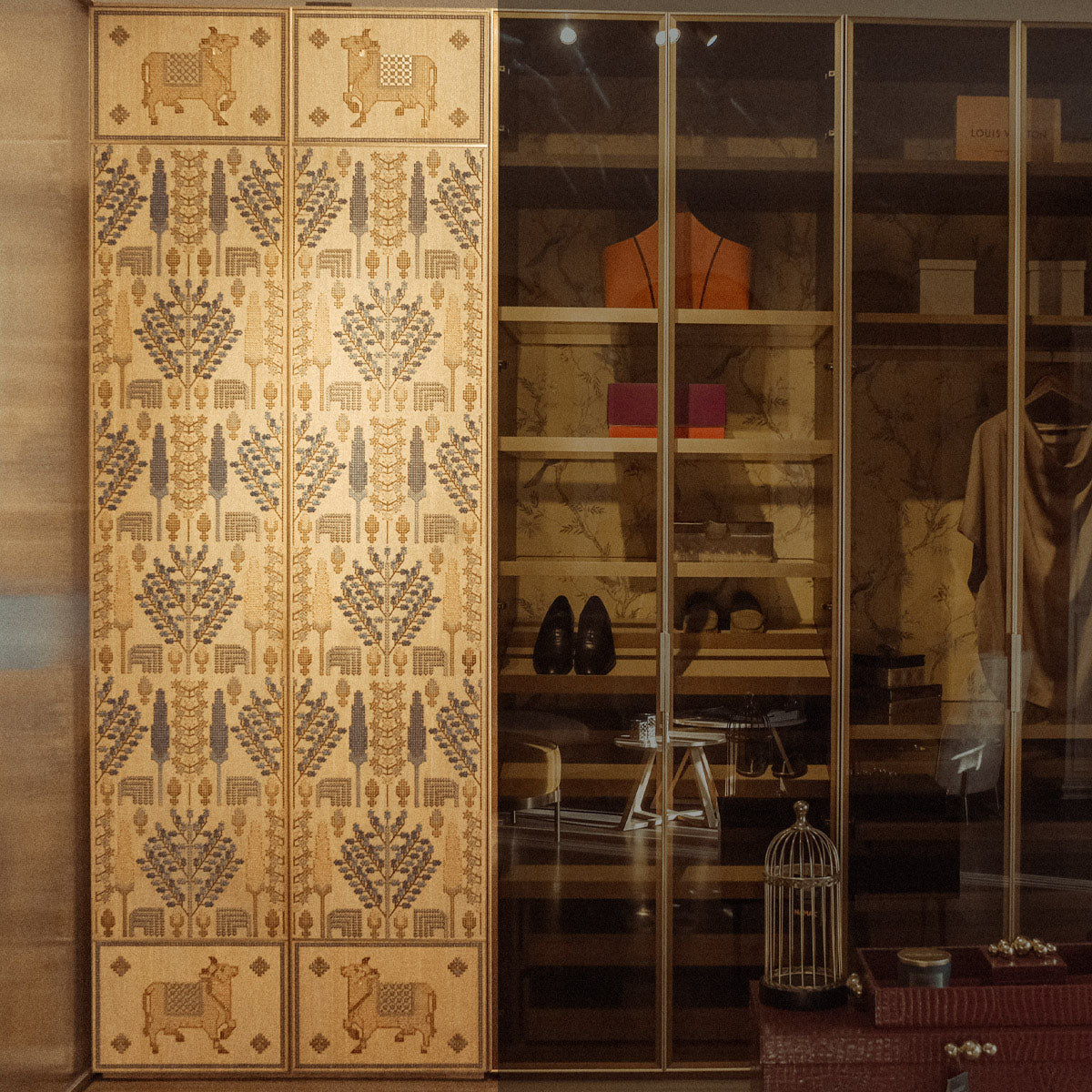
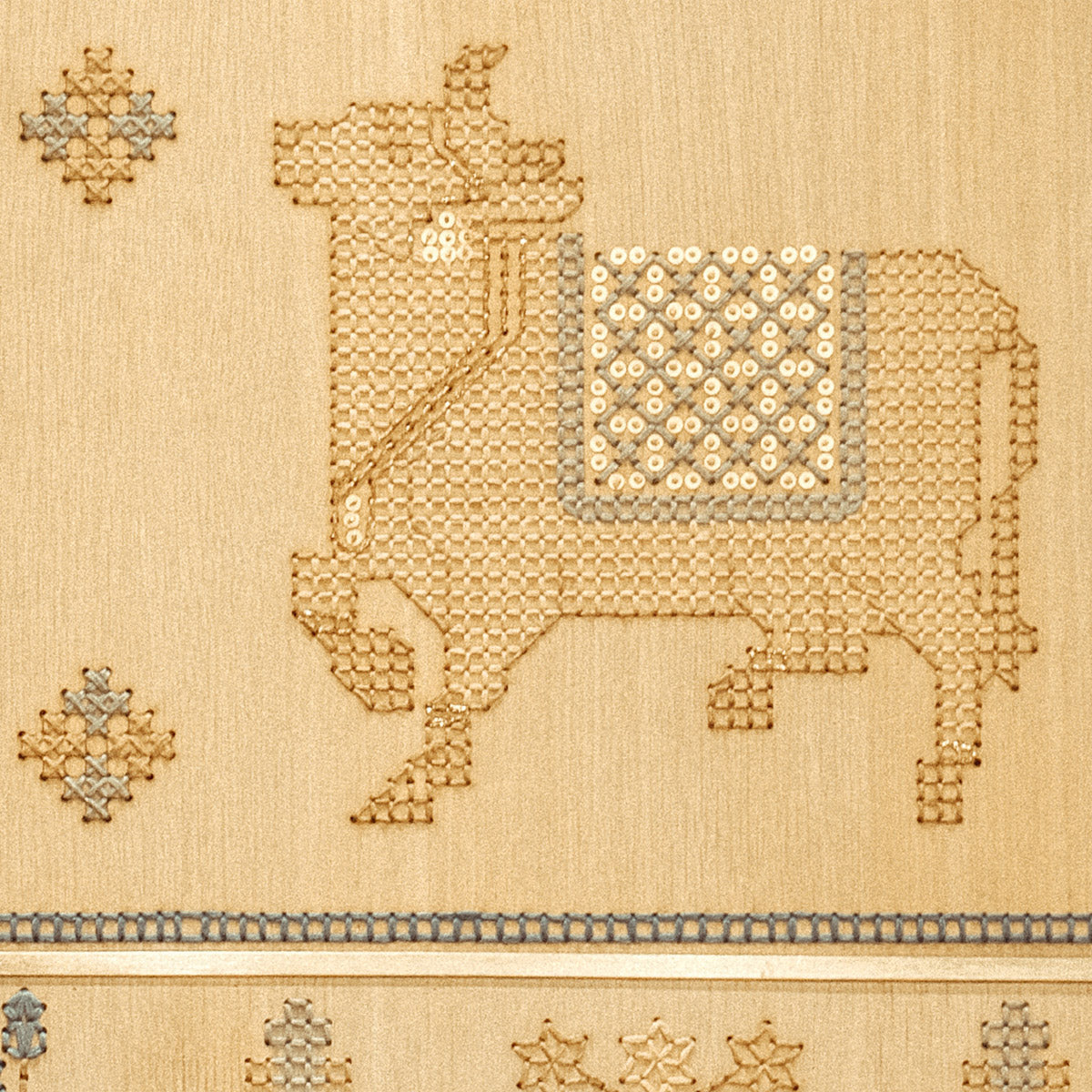
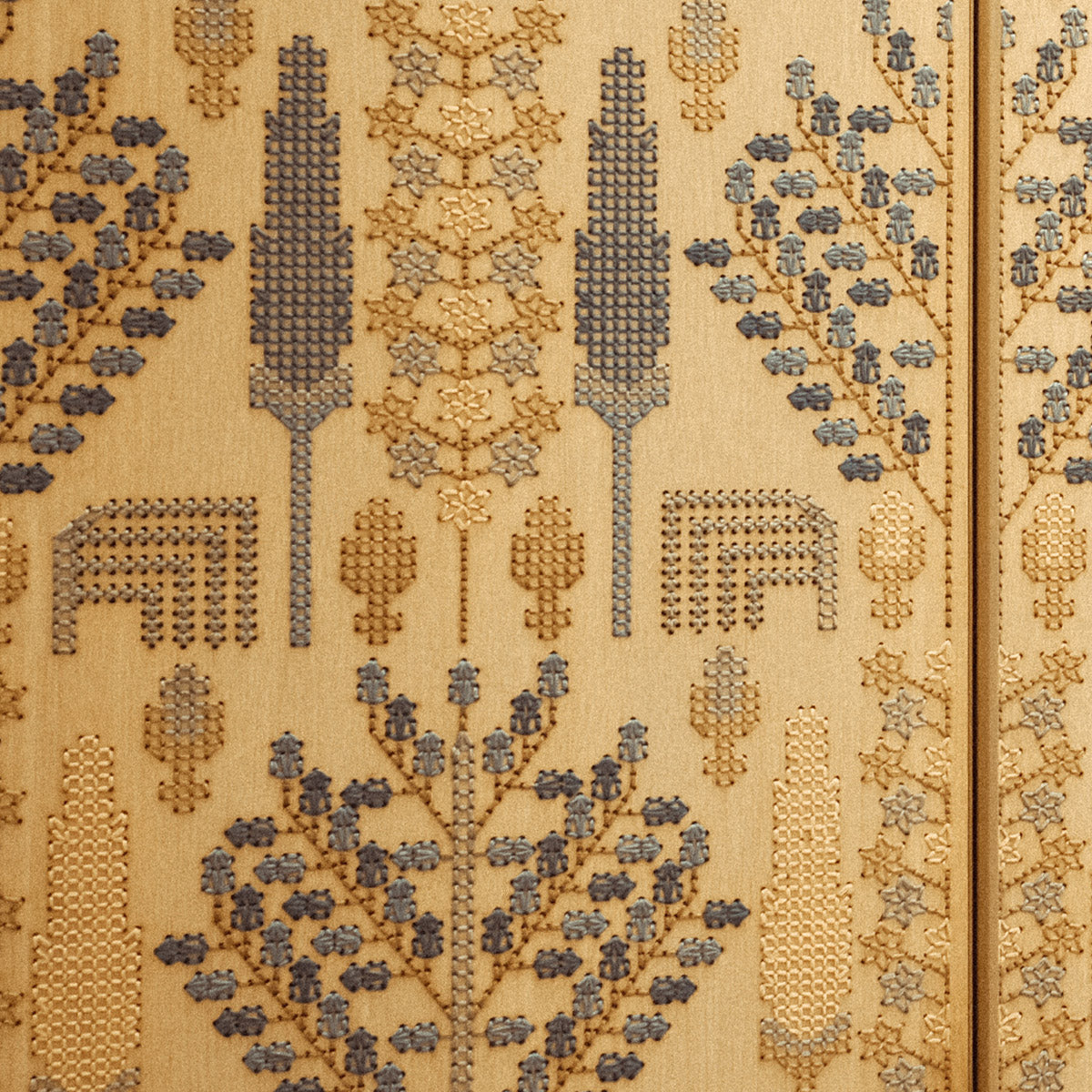
Rather than replicating carpet as a surface pattern, the inquiry shifts its structural logic into architectural scale. Embroidery enters the veneer as incision — thread functioning as line, rhythm, and calibrated relief.
The spatial question addressed is how large vertical storage planes may carry narrative without visual heaviness. By embedding ornament into joinery rather than layering it upon cabinetry, cultural memory becomes structural.
Ornament transforms into architecture.
Spatial Behaviour & Resonance
The surface behaves as an architectural tapestry.
Across full-height wardrobe shutters, embroidery stabilises the vertical field. It absorbs light, reveals texture upon proximity, and anchors proportion through disciplined articulation. The veneer substrate provides tonal grounding, while the embroidered line introduces measured interruption.
This study suits interiors grounded in material intelligence rather than applied decoration. It resonates with clients who understand that storage may hold as much presence as furniture — and that tradition can be translated without repetition.
To see how this surface operates in architectural joinery, view the Case Study: Carpet as Architecture — Wardrobe Surface System.
Process & Material Calibration
The study was first resolved through scaled compositional testing before moving into full-height shutter application.
White Oak veneer panels were prepared to accept hand embroidery using anchor threads and restrained sequin articulation. The integration required careful control of tension, anchoring technique, and substrate stability to ensure durability within architectural joinery.
Surface development and hand-embroidery required approximately 680 hours.
Current Manifestation
Initially developed as embroidered wardrobe shutters within a residential setting.
Substrate: Architectural-grade White Oak veneer
Medium: Hand embroidery using anchor threads with restrained sequin articulation
Application: Full-height wardrobe shutter planes
Expansion & Commissioning Potential
This surface logic may extend into:
• Veneered wall panels / Pivot doors
• Integrated architectural joinery systems
The method supports both uninterrupted large-scale fields and modular compositions.
Commissioning allows recalibration of motif density, tonal shifts, metallic restraint, and compositional scale — adapting cultural logic to spatial narrative rather than replicating form.
To understand how such investigations integrate into larger interiors, explore Surface Systems.
For bespoke architectural development, see Working Together.
Surface Study Details
Medium: Hand embroidery using anchor threads with restrained sequin articulation
Substrate: White Oak veneer (architectural grade)
Scale: Full-height wardrobe shutter application (expandable to architectural surface fields)
Hours of Devotion: ~680 hours
Architectural Potential: Veneered wall panels, pivot doors, commissioned surface systems
Refer to the Technical Guide to Embroidered Veneer Panels
Choose options
Commissioned Adaptations
While initially developed at an intimate scale, each surface study holds potential for architectural recalibration. Density, motif structure, and material articulation can be restructured in response to wall dimensions, spatial rhythm, and site context. Commissioned adaptations evolve through the studio’s structured development framework.